 dsale@topsfp.com
 español
 English
 русский
 العربية
 中文
中文



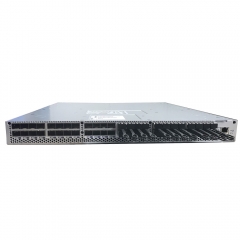
For global data-center hardware procurement, the supplier’s location can affect documentation, routing options, communication, and the way a buyer structures a purchase order. It should not replace technical qualification, export-control review, or a clear commercial agreement. This guide explains how to compare a Hong Kong-based supplier with a mainland China supplier when purchasing optical transceivers, network adapters, enterprise SSDs, GPUs, switches, and related server parts. The goal is practical due diligence: identify the factors that may affect your project, ask the right questions before payment, and document every decision that affects delivery or compatibility.
Start with the project, not the jurisdiction
A supplier location is only one input to a sourcing decision. Begin with the workload and the equipment already installed. Record the exact host server, switch, GPU platform, interface generation, port count, transceiver reach, firmware requirements, rail-kit or caddy requirements, operating environment, and required delivery date. A good request for quotation also states the desired condition, warranty expectation, quantity, destination country, and whether partial shipment is acceptable. This information lets both a Hong Kong and a mainland supplier quote the same technical scope, rather than comparing two offers that look similar but contain different parts, revisions, or support terms.
What Hong Kong’s free-port status means
Hong Kong is a free port and does not levy customs tariffs on imports and exports, subject to the territory’s trade-control rules. That can simplify the local handling side of a transaction, especially when goods move through Hong Kong as a regional distribution point. It does not eliminate destination-country duty, VAT, sales tax, licensing, sanctions screening, product restrictions, or documentation obligations. Buyers should therefore request the proposed Incoterms, country of origin, tariff classification where available, exporter or importer responsibilities, and any declared-value policy. Treat landed cost as a complete calculation, not as a shipping quote alone.
Verify the legal entity before discussing price
Before issuing a purchase order, confirm the legal name that will appear on the quotation, pro-forma invoice, commercial invoice, bank beneficiary details, and packing list. Hong Kong’s Companies Registry provides public search services for registered-company information; that is useful for a basic identity check, but it is not a substitute for a full supplier audit. Ask the supplier to confirm its registered address, primary contact, payment beneficiary, and after-sales contact in writing. If the project is material, use your own finance, compliance, or procurement process to validate the counterparty and confirm that the bank account is consistent with the contracting entity.
Build a compliance-ready RFQ
Networking and AI-server hardware can involve rules that vary by product, end user, destination, and transaction structure. Avoid generic statements such as “no licence is needed” or “all routes are available.” Instead, provide an accurate end-use and ship-to-country description, request the manufacturer part number and country of origin, and ask whether the supplier has identified any shipping restrictions. Your organisation should make the final determination with its own compliance advisers. The RFQ should also state whether substitutions require written approval. That one line prevents a common problem: receiving a technically similar adapter, optic, or SSD that is not approved for the intended platform or project.
Plan logistics around actual availability
Hong Kong is an established air-cargo and logistics hub, so it can be a useful consolidation point for mixed hardware orders. The practical question is whether the quoted items are physically available, allocated to another customer, in transit, or subject to manufacturer lead time. Request a line-by-line availability report with the stock location, estimated dispatch date, serial-number or lot requirements, packing method, and courier service. For time-sensitive deployments, agree on the latest acceptable dispatch date and define how the supplier will notify you if any item slips. Never treat a generic transit-time estimate as a delivery guarantee; customs clearance, destination handling, and carrier capacity remain outside the seller’s direct control.
Compare the total commercial package
A lower unit price does not always create a lower project cost. Compare currency, payment terms, Incoterms, freight, insurance, duty and tax exposure, test evidence, return handling, warranty length, and the cost of a replacement shipment. For optical modules and network adapters, confirm whether the quotation includes coding or compatibility testing for the named host platform. For SSDs, memory, GPUs, and switches, request the exact manufacturer part number, condition, firmware policy, and any accessories that are required for installation. Put these details on the quotation or purchase order so that the purchase record remains useful months later when an operations team needs to identify a deployed part.
Choose payment terms deliberately
Payment options differ by supplier, order value, customer history, and internal policy. Rather than assuming that a particular jurisdiction guarantees a specific payment method, ask which options are available for the order and what documents accompany each stage. New suppliers are often evaluated with a small, well-documented pilot order before a larger deployment. For a larger order, align the payment milestone with inspection, shipping documentation, and acceptance procedures defined by your procurement team. Keep commercial communication in a traceable channel and confirm any change to bank details through an independently verified contact, not only through an email thread.
Buyer checklist before release
- Match every line item to the approved manufacturer part number and revision.
- Confirm platform compatibility, firmware or coding requirements, and included accessories.
- Verify legal entity, beneficiary details, destination, Incoterms, and shipping responsibilities.
- Request availability, dispatch assumptions, packaging expectations, and a warranty or return process.
- Retain the quotation, technical datasheet, test evidence, invoice, packing list, and tracking number with the project record.
How to use this comparison
A Hong Kong-based supplier may be a good fit when a buyer values regional consolidation, transparent documentation, or a particular logistics route. A mainland supplier may be the better fit when it has direct factory access, a proven engineering relationship, or the required stock. The strongest choice is the supplier that can document the exact product, commercial terms, compliance path, and support process for your project. Topstar can provide a quotation request format for optical modules and AI-server parts; final compatibility, availability, pricing, and shipping terms should always be confirmed for the specific order.
