 dsale@topsfp.com
 español
 English
 русский
 العربية
 中文
中文



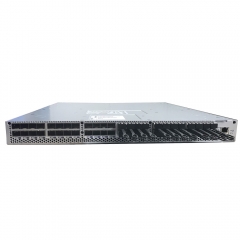
In the global wave of iterations in artificial intelligence (AI), high-performance computing (HPC), cloud computing, and data centers, NVIDIA has consistently maintained a central position. Its product portfolio covers core hardware such as graphics processing units (GPUs) and smart network interface cards (CX series), profoundly driving technological upgrades across various industries. Among them, the NVIDIA ConnectX-7 (CX7) and ConnectX-8 (CX8), as representatives of high-performance smart network interface cards, collaborate with GPUs to build a full-stack "computing power + network" solution, becoming a core support for AI factories and hyperscale data centers. This article combines official information and industry practices, corrects common misconceptions, and deeply analyzes the details and application value of core products, providing accurate reference for IT professionals.
I. Cognitive Correction: Clarifying Common Misconceptions about NVIDIA CX7 and CX8
There are many misconceptions about the NVIDIA CX series in the market: First, it is mistakenly confused with other brands' products of the same name (such as the Mazda CX-7 car); second, it is believed that CX7 and CX8 only support the Ethernet protocol, when in fact they are compatible with both InfiniBand and Ethernet protocols; third, it is equated with ordinary network cards, ignoring core advantages such as hardware acceleration and low latency; fourth, it is believed that CX8 is simply a bandwidth upgrade of CX7, when in fact the two differ in all aspects in terms of protocol, energy efficiency, and scenario adaptability. Core understanding: CX7 and CX8 are high-performance smart network cards/super network cards focused on data center, AI, and other scenarios, not consumer-grade hardware.
II. In-depth Analysis: Technical Details and Core Differences of NVIDIA CX7 and CX8
(I) NVIDIA ConnectX-7 (CX7): A High-Performance, Cost-Effective Cornerstone of High-Speed Interconnection
As a fourth-generation smart network card, CX7 is positioned for mid-to-high-end data centers and HPC clusters, with its core advantages being "high performance + high compatibility + high cost-effectiveness". In terms of hardware, it supports PCIe Gen4.0/5.0 protocols, SERDES speeds of 16/32GT/s, an x16 lane design compatible with PCIe Gen3.0, a maximum throughput of 400Gb/s, and supports both InfiniBand and Ethernet protocols. RoCE mode can be switched via the MLNX_OFED tool.
Functionally, it incorporates the NVIDIA network computing acceleration engine, supporting ASAP2, GPUDirect storage, and hardware acceleration for encryption and decryption, reducing CPU usage. Its physical specification is a PCIe half-height, half-length design, suitable only for data center servers, requiring specific power and cooling conditions. In terms of applications, it is suitable for small and medium-sized AI clusters, enterprise-level HPC, and other scenarios with bandwidth requirements up to 400Gb/s, and is also suitable for AI model fine-tuning and industrial simulation.
(II) NVIDIA ConnectX-8 (CX8): Core Support for High-End Scenarios
As an iteration of the CX7, the CX8 is positioned for ultra-large-scale data centers and trillion-parameter AI factories, fundamentally addressing high-speed interconnect bottlenecks. In terms of hardware, it supports the PCIe Gen6 protocol with a transmission rate of 64GT/s and a maximum throughput of 800Gb/s. It is compatible with InfiniBand and multi-rate Ethernet, and adapted to next-generation GPUs (H100, Rubin GPU).
Functionally, it enhances adaptation to AI/HPC scenarios, supports an upgraded network acceleration engine, and comes in PCIe vertical cards and OCP Spec 3.0 cards, adapting to complex data center environments and compatible with mainstream operating systems. Compared to the CX7, its core differences are doubled bandwidth, upgraded protocol (supporting XDR protocol), and optimized scenario adaptation, enabling it to collaborate with the Vera Rubin platform to build a full-stack AI infrastructure.
(III) CX7 vs. CX8 Selection Guide
The core selection principle is "Scenario + Budget": 1. For small to medium-sized AI clusters with bandwidth requirements ≤400Gb/s, prioritizing cost-effectiveness, choose CX7; 2. For ultra-large-scale AI factories and trillion-parameter model training, with extremely high requirements for bandwidth and low latency, choose CX8; 3. For existing PCIe Gen4/5 servers with no upgrade plans, choose CX7; for plans to deploy next-generation GPUs, directly choose CX8 to avoid secondary upgrades.
III. Synergistic Strength: The Industry Value of NVIDIA GPUs and the CX Series
NVIDIA's core competitiveness lies in its full-stack solution of "GPU + CX series + software ecosystem": GPUs, as the computing core, are responsible for AI computing and HPC simulation; CX7 and CX8, as the network core, solve the bottleneck of multi-node data transmission, and together they address the pain point of "high computing power, slow transmission."
(I) NVIDIA GPUs: The Core Engine of the Computing Power Revolution
NVIDIA GPUs have expanded beyond graphics rendering to multiple fields such as AI and HPC. Their core advantage lies in parallel computing capabilities, and they are divided into consumer-grade (GeForce series) and data center-grade (H100, Rubin GPUs, etc.). The H100 supports FP8 precision computing, significantly improving AI training speed; the Rubin GPU, in collaboration with Vera CPUs and CX8 processors, builds AI supercomputers, significantly improving training efficiency and inference energy efficiency.
The core of this collaboration is GPUDirect technology, which enables direct data transmission between the GPU and the network card, bypassing the CPU as an intermediary, reducing latency, and shortening the training cycle for large AI models.
(II) Core Applications of the Full-Stack Solution
1. AI and HPC: CX8, H100, and Rubin GPUs collaborate to support trillion-parameter model training; CX7 and CX8 are adapted for multi-node interconnection in supercomputing, supporting tasks such as meteorological simulation and gene sequencing.
2. Cloud Computing: Cloud service providers deploy the CX series and GPUs to build elastic computing platforms, supporting services such as AI inference and cloud gaming.
3. Emerging Scenarios: In space computing, the CX series and GPUs are integrated to launch the Space-1 module, providing efficient AI computing power; in the AI-RAN field, the two collaborate to transform 5G base stations into edge AI platforms.
4. Industry and Automotive: Supporting intelligent manufacturing, industrial simulation, and the R&D and deployment of L4-level autonomous driving.
IV. Industry Trends and Industry Suggestions
In the future, the CX series will iterate towards higher bandwidth and lower latency (e.g., CX9 may reach 1.6Tb/s), while GPUs will enhance parallel computing and energy efficiency. Both will be deeply integrated with CPUs and LPUs.
Industry professionals recommend the following: First, precise product selection, considering bandwidth, budget, and hardware compatibility; second, prioritizing collaborative optimization, deploying GPU clusters with corresponding CX network cards and enabling GPUDirect technology; and third, staying informed about technological advancements, closely following new product developments such as those from GTC conferences, and optimizing the technical architecture accordingly.
In conclusion, NVIDIA CX7, CX8, and GPUs are core hardware in data centers and the AI industry, with their technological advancements driving digital transformation across various sectors. Understanding their technical characteristics and selection logic will help industry professionals address technological challenges and seize industry opportunities.

- casa
- productos
- Original Brand Switch
- SSD
- OEM Fiber Optic Transceiver
- Original Brand Optical Transceiver
- Network Card
- Fiber Patch Cable
- GPU
- Memory
- HDD
- sobre nosotros
- Tour por la fábrica
- Noticias
- Contáctenos
